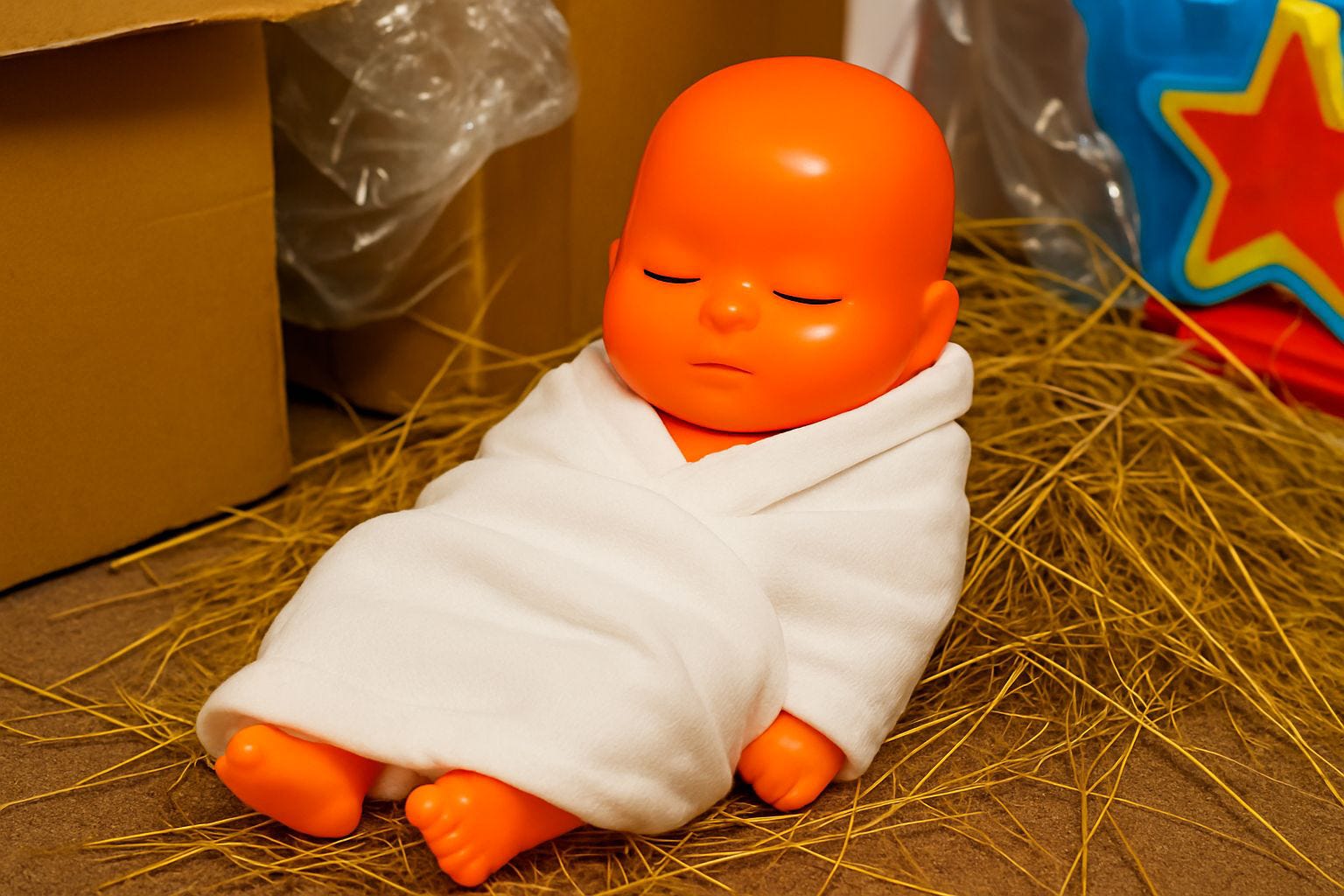
A plastic baby doll portraying the real infant Jesus accurately symbolizes plastic rightwing Christianity. And that plastic will pollute the environment and minds for generations.
Not sure who’d be the parallel character to Dickens’s Ebenezer Scrooge if the key hater of Christmas celebrations would be in the context of religion rather than commerce and family. Some would nominate me, I suppose. And I do have excellent credentials including 35 years serving as a pastor of churches celebrating Christmases plus bonus experience portraying Ebenezer in my high school’s production of “A Christmas Carol.”
Getting right to it, Cratchit, I must say that a pageant often becomes more significant in the minds of audiences and actors than the event being pageantized. I don’t want to take away from the countless hours invested by mostly-sincere committees and casts in planning, rehearsing, costuming, set-designing for a cause that they believe celebrates Jesus and their faith in him. I make this point despite the negativity that can rear its ugly head guiding people not toward cardboard Bethlehems but to competitive dynamics among those auditioning for plum-pudding-roles, to irritability and impatience among directors and crews, and to a complete loss of emphasis on good that might come from a program focused ostensibly on Jesus of Nazareth albeit in his infancy.
Church groups can have lots of fun and derive meaning working together to build biblical sets, create costumes from everything—bathrobes to bedsheets—along with more elaborate textiles and accessories, and blocking for stage positions. Even with dollar store bargains the costs can really mount up.
One item not splurged on, however, is the Caucasian baby doll who will be baby Jesus; typically, the most marked down bargain basement item on stage. The price tag on the doll at purchase reflects the relative insignificance of Jesus to the pageant and to the religion that bears one of his titles. How many people pretending to be concerned about keeping Christ in Christmas really are?
There’s also this. Some parents will never have any other opportunities to think of their Virgin Mary teen daughters as virginal or their celibate Joseph teen sons as celibate.
It’s hardly insignificant that the early church had no interest whatsoever in celebrating or even remembering Jesus’ birth itself. With that in mind, how about a set of scenes to reenact this year at Christmas Eve services in place of Nativity tableaus? I’m thinking a “Life in Pieces” format.
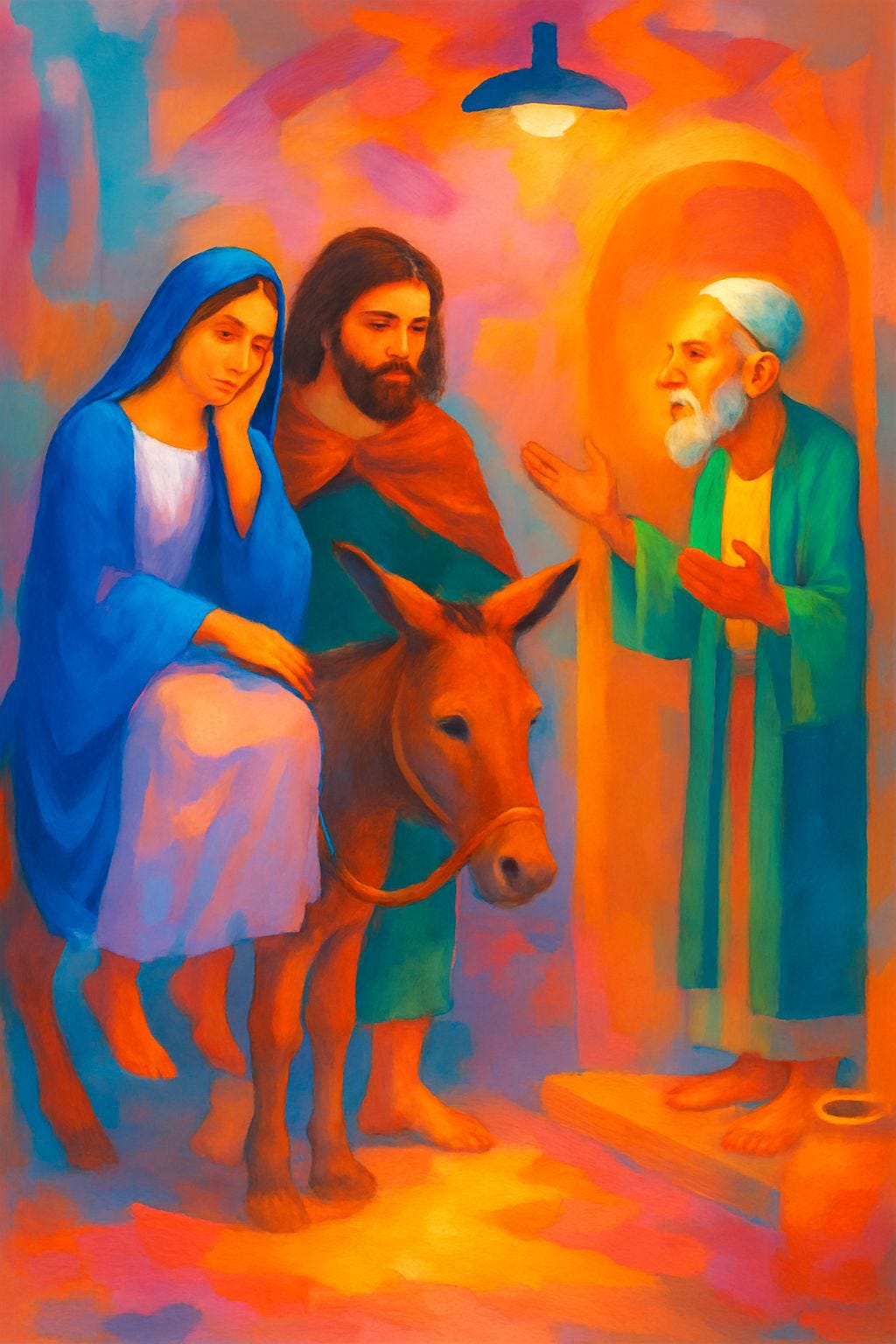
- Mary is a teen mom-to-be, nine months pregnant and riding on a donkey equipped with side saddle of some sort. Every uneasy place on the pathway the donkey had to walk over jarred Mary making her think her water was breaking. As every male had to return to his place of birth to register for taxes, all accommodations were full. The Innkeeper who offered them space in the stable adjacent to his home/inn really was not a callous villain but a kind and thoughtful person. His compassion and generosity are to be extolled in a our country with elected leaders and their faux-faith base who don’t care if babies are born without access to adequate nutrition or if mothers die in childbirth while the filthy rich get richer and filthier by the minute.
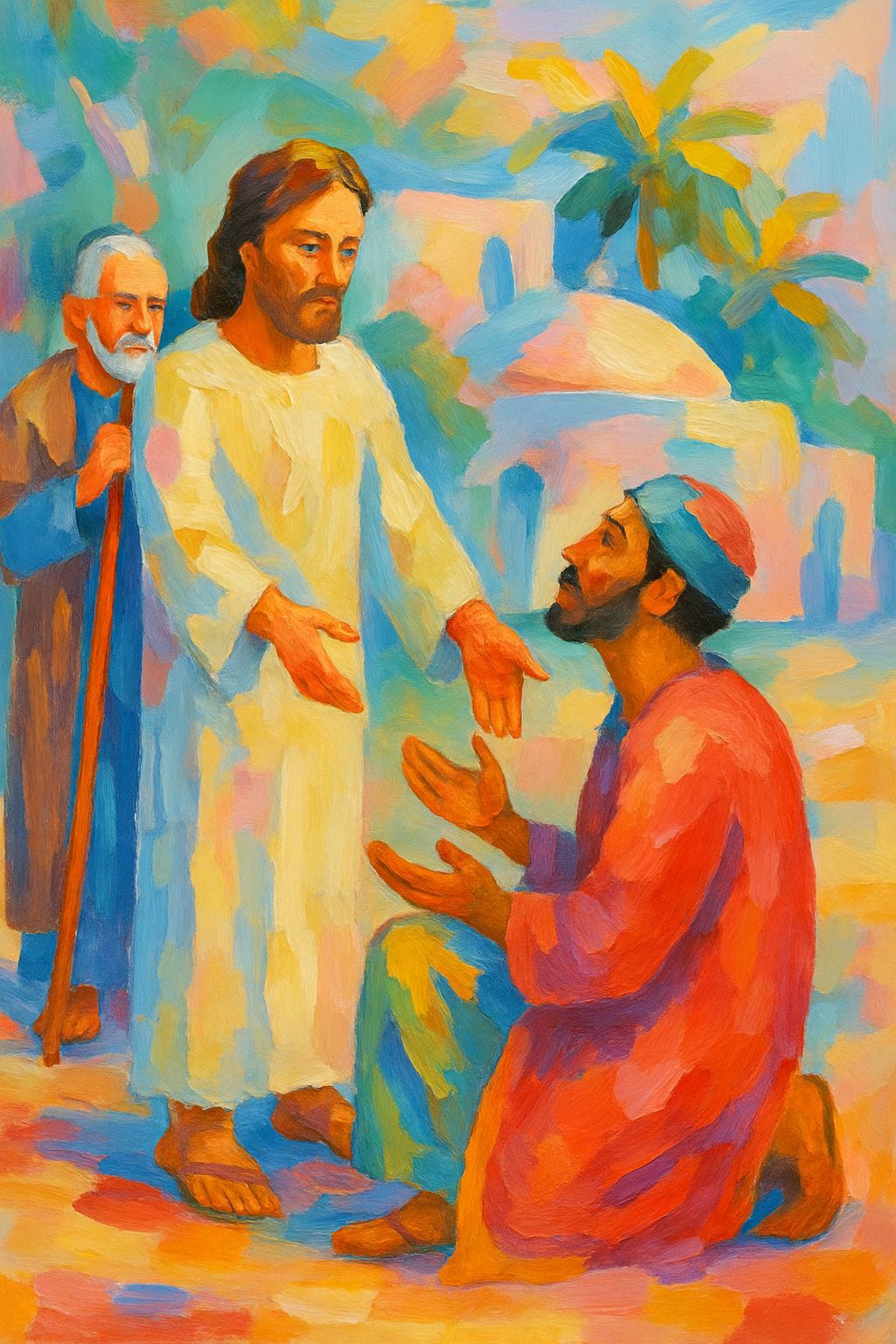
- Once, out of the blue, a rich young man humbled himself and put his social position aside by running up to Jesus in a public context and getting down on his knees, which Jesus did not expect or encourage, to ask a question. The young man was Jewish and hadn’t heard much about meaningful existence beyond death. Jesus taught about life “into the ages” (typically translated in Greek as eternal life), and word got around. The question was: “What must I do to be certain I can experience life into the ages?” Jesus told him he needed to keep all the commandments. He said, “Done that my whole life. That’s it? I’m good?” Jesus explained that the next step would be selling his considerable possessions and giving the proceeds to the poor. The conversation ended abruptly as the young man rose to his feet and walked away in sadness and silence—an indication he likely would be unwilling to give his money to the poor, thus choosing wealth over the opportunity to care for the poor and over life into the ages. The lesson was, and it stings or should sting money hoarders, that ignoring the poor and their needs, passively as well as actively, is not an option for anybody connected to God. No plastic baby doll needed for this Jesus-focused celebration of his life.
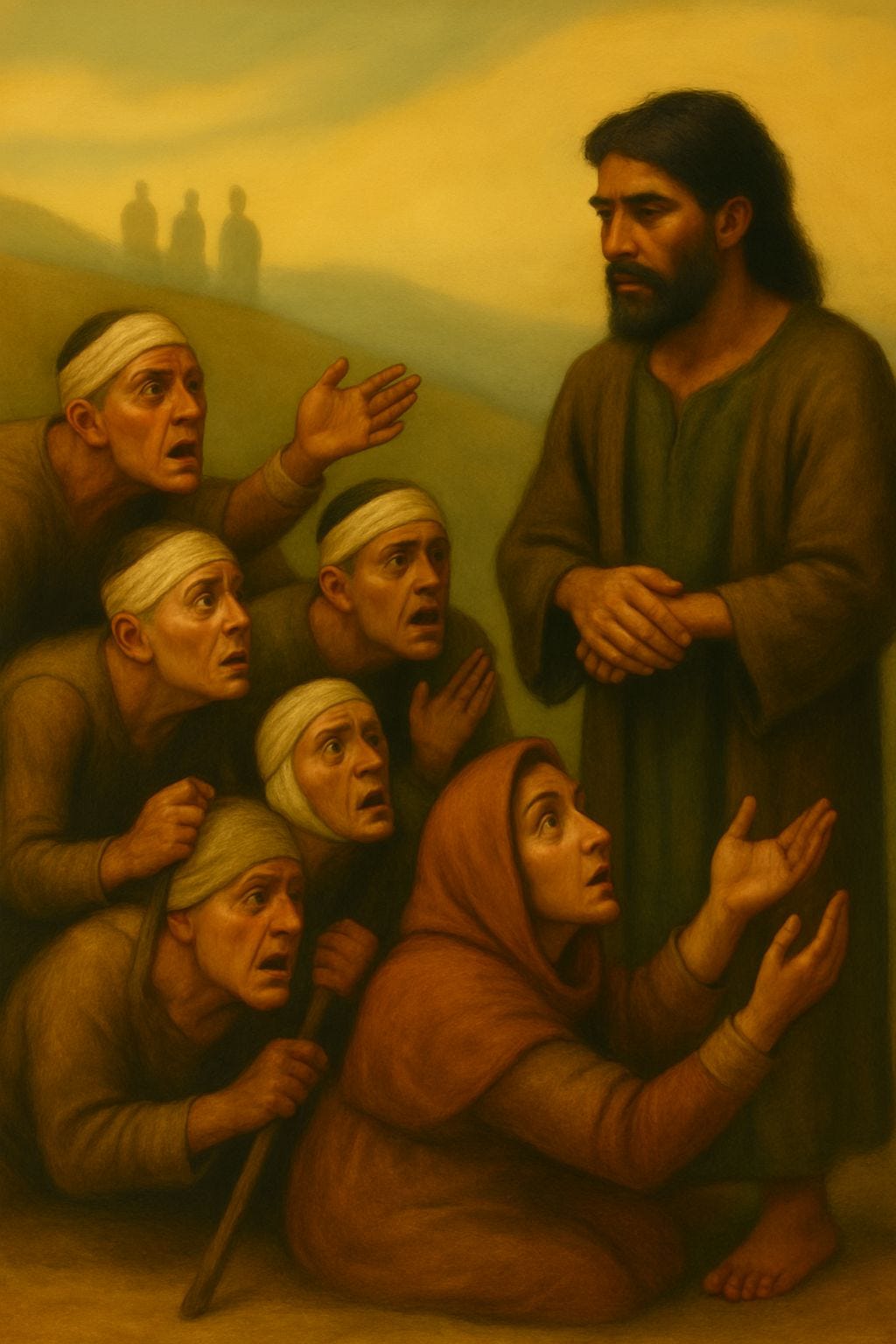
- Lepers in Jesus’ day were living with obvious terminal illness. Both to prevent the possibility of contagion and to keep unsightly illness out of sight and out of mind, lepers were banned from mainstream society and forced to live in leper colonies off beaten paths; they were very easy to avoid that way. Defying norms and expectations and risking illness himself, Jesus not surprisingly went out of his way to get to lepers to participate in the possibility of health restoration, which, in the case of this disease, was extremely rare. Sometimes, with Jesus’ interactions, healing occurred nonetheless. Even in cases where physical healing did not come about the presence of Jesus and his concern healed souls. In the United States, under present political godlessness, the sick are increasingly being treated like lepers in the time of Jesus, even with cures for many diseases readily available—that is, to well-placed individuals, Caucasians in particular. Followers of Jesus, though, would be embracing the poor and promoting healing for all of them.
Finally, it’s beginning to look a lot like Jesus. Isn’t that Christmas?
—David Albert Farmer